
OVERVIEW
Progress in strength training requires precision, consistency, and discipline. Beginning a training journey often involves predictable operational errors that stall development, cause injury, or compromise recovery. Recognizing these friction points early ensures sustainable progression. This analysis outlines critical errors encountered when starting strength training and defines corrective protocols.
01. EGO LIFTING AND EXCESSIVE LOAD
Attempting maximal loads prematurely remains the primary driver of acute injury and technique breakdown. Moving excessive weight without foundational structural adaptation forces the body to compensate through dangerous joint angles and momentum.
- The Error: Selecting resistance based on appearance or arbitrary milestones rather than muscular control.
- The Correction: Restrict load until every prescribed repetition executes with absolute control throughout the entire range of motion. Resistance increases only after technique maintains stability under fatigue.

02. SKIPPED WARM-UPS AND MOBILITY DEFICITS
Initiating heavy mechanical loading with cold connective tissue accelerates wear and reduces force output. Skipping dynamic preparation limits joint articulation and neuromuscular activation.
- The Error: Transitioning immediately from rest to heavy working sets without physiological preparation.
- The Correction: Implement a structured five-to-ten-minute dynamic priming sequence focusing on mobility, blood flow, and movement pattern rehearsal prior to touching working weights.
03. PROGRAM HOPPING AND ERRATIC SCHEDULING
Switching exercise protocols every week prevents the nervous system from adapting to specific movement patterns. Random workout generation yields random physiological outcomes.
- The Error: Abandoning routines prematurely before neurological and muscular adaptations occur.
- The Correction: Commit to a foundational, minimalist training template for a minimum of eight to twelve weeks. Master the core mechanical patterns before altering volume or exercise selection.
04. IGNORING PROGRESSIVE OVERLOAD
Stagnation occurs when training variables remain constant across consecutive weeks. Muscular hypertrophy and strength gains demand incremental adaptation challenges.
- The Error: Repeating identical weights, sets, and repetitions indefinitely without recording performance metrics.
- The Correction: Track every session meticulously. Incrementally add load, repetitions, or sets systematically once current volume standards achieve complete mastery.

05. COMPROMISED FORM ON COMPOUND MOVEMENTS
Executing fundamental compound lifts (squats, deadlifts, presses) with structural faults reduces efficiency and increases vulnerability. Lack of core bracing and improper spinal alignment disrupt force transfer.
- The Error: Allowing lumbar flexion, knee valgus, or unstable foot placement during heavy loaded patterns.
- The Correction: Prioritize mechanical integrity over additional plates. Utilize technical checkpoints for core bracing, scapular retraction, and neutral spine alignment on every repetition.
06. NEGLECTING RECOVERY AND SLEEP
Training provides the stimulus, but adaptation occurs exclusively during rest. Ignoring systemic recovery compromises immune function, hormone regulation, and tissue repair.
- The Error: Chronic sleep deprivation combined with high-frequency training across identical muscle groups without rest days.
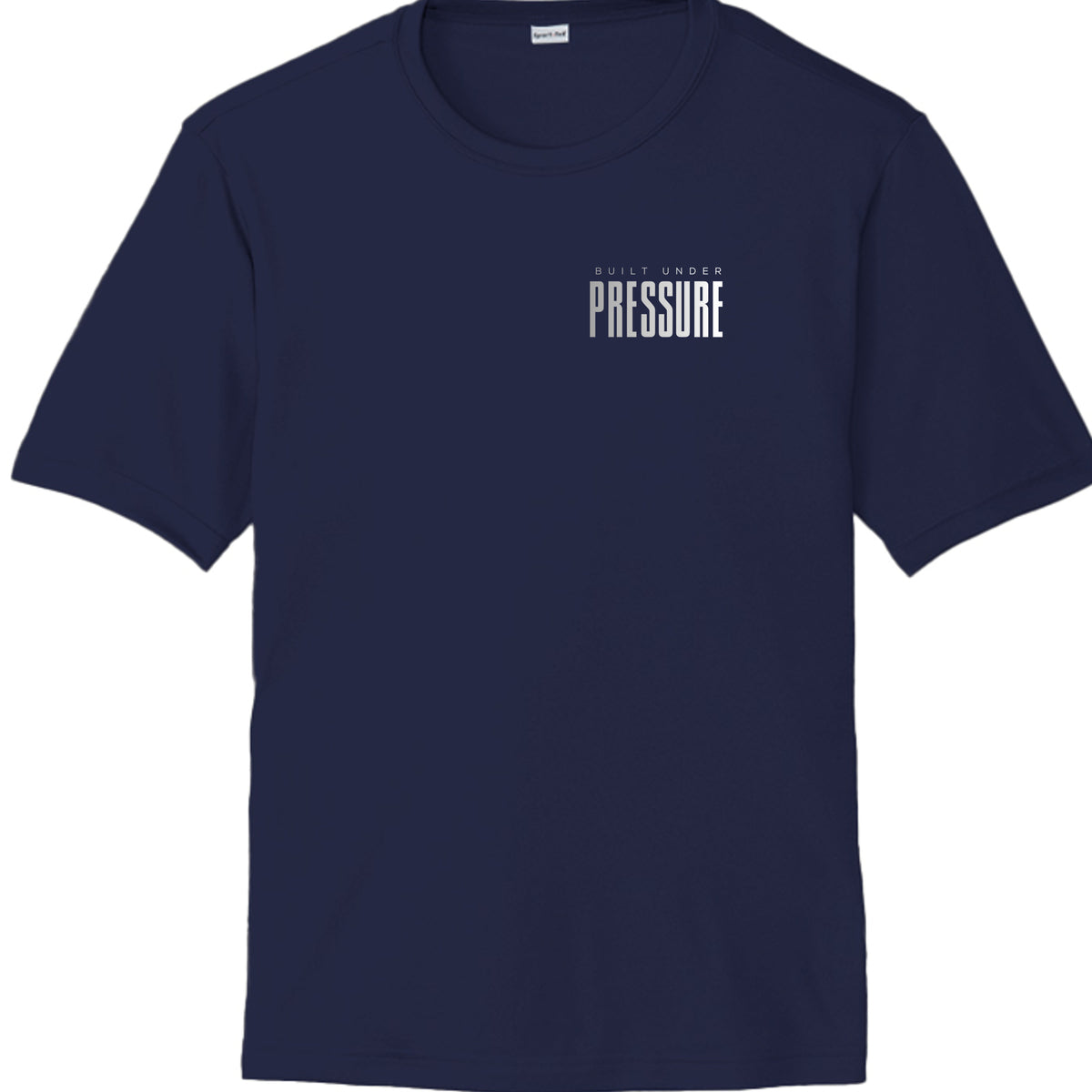
- The Correction: Allocate consistent rest days into weekly schedules. Secure seven to nine hours of nocturnal sleep as a non-negotiable operational parameter. Proper apparel optimization, such as moisture-wicking fabrics from the Built Under Pressure line, ensures thermal regulation and unhindered range of motion during demanding sessions.
CORRECTIVE ACTION CHECKLIST
- Plan: Execute a minimalist, structured full-body program 3 days per week.
- Warm-Up: Complete dynamic mobility drills prior to heavy mechanical loading.
- Load: Select sustainable resistance; eliminate ego lifting entirely.
- Technique: Maintain strict control, neutral spine, and intentional core bracing.
- Progress: Track metrics session-to-session; apply progressive overload systematically.
- Recovery: Prioritize sleep, hydration, and designated rest days.
Strength is earned through discipline, consistency, and meticulous attention to execution. Eliminate variables, protect structural integrity, and maintain absolute focus.