
Table of Contents
- What Makes Activewear Work for Strength Training (Not Just Cardio)
- Best Activewear for Strength Training: Quick Comparison
- Iron Thread Activewear: Built for Heavy Lifting
- Lululemon: Technical Fabrics That Last
- Women's Best and Nike Pro: Support and Compression
- Budget Options: Colorfulkoala and All In Motion
- Splits59: Style Meets Performance
- Durable Gym Clothes for Lifting: What to Check
- Frequently Asked Questions
Last Updated: September 9, 2026
What Makes Activewear Work for Strength Training (Not Just Cardio)
The best activewear for strength training must hold up under load, friction, and repeated washing, not just look good for a jog. Most activewear for strength training fails because it is designed for cardio, prioritizing lightweight breathability over the durability required for barbell contact, bench press friction, and deep squat mechanics.
Strength training creates unique stresses that running and yoga never will. A barbell snags fabric on your shoulders, a bench press grinds the material across your upper back, and deep squats test whether the waistband stays anchored or rolls down.
The Biomechanics of Lifting That Dictate Fabric Choice
The demands on clothing during strength training are directional and load-bearing, not just sweat-based. Consider the three most common compound lifts and what they do to fabric:
- Deadlifts: The barbell rests against the shins and thighs during the pull. Knurled bars act like coarse sandpaper on fabric. A standard lightweight legging or jogger will show pilling or even snagging within a few sessions. Gear built for lifting uses a tighter knit or a brushed-face fabric that lets the bar slide rather than catch.
- Back Squats: The bar sits across the upper traps and rear delts. Any seam or thick logo in that zone becomes a pressure point. Worse, a low-quality waistband will roll or shift as you descend into the hole, forcing a reset mid-set. High-rise waistbands with internal silicone grip strips or a wide, non-elastic panel are the difference between a stable lift and a constant adjustment.
- Bench Press: The upper back grinds against the bench pad on every rep. That friction, combined with the shearing force of the press, wears down fabric in the scapular area. Flatlock seams in that region prevent chafing and reduce the chance of seam blowout under repeated load.
Fabric Weight, GSM, and the Cardio Trap
Cardio apparel is often built in the 120-150 GSM range to maximize breathability, but that lightness is a liability under a loaded barbell. Strength-training gear typically sits in the 200-250 GSM range.
The Stretch Recovery Test
A fabric's elastane content matters less than its stretch recovery. A legging with 20% elastane can still bag out at the knees if the base yarn is low quality. Most premium lifting fabrics are engineered for 90% or better recovery after repeated 50% elongation.
Why Seam Placement Is a Strength-Specific Issue
Cardio wear places seams for chafe reduction during repetitive motion. Strength wear must place seams to avoid pressure points under a loaded bar. A seam running directly across the top of the shoulder will dig in during a front squat or overhead press. Look for garments that move seams away from the high-contact zones.
The Wash-Cycle Reality
Most lifters train three to five times per week, meaning activewear goes through the wash far more often than casual athletic wear. Chlorine, fabric softeners, and high-heat drying all degrade elastane faster than any workout.
Before you buy, check three things: fabric composition, gusset construction, and seam quality. A squat-proof fabric should pass the bend-over test with zero transparency. The gusset should be a full diamond or crotch gusset that allows unhindered movement. Seams should be flat and reinforced, not cheap overlock stitching that unravels after a few wash cycles.
Best Activewear for Strength Training: Quick Comparison
| Brand | Starting Price | Key Features | Best For |
|---|---|---|---|
| Iron Thread Activewear | See website | Premium performance fabrics, built for training, recovery-ready | Serious lifters wanting durability and versatility |
| Lululemon | $88 | Luxtreme fabric, four-way stretch, high-rise options | Athletes seeking proven technical fabrics |
| Women's Best | $40 | Sculpting fit, high-support sports bras | Women wanting aesthetic gym performance |
| Nike Pro | $35 | Dri-FIT, compression fit | Athletes needing muscle support |
| Colorfulkoala | $25 | Scrunch detailing, high-stretch blend | Budget-conscious lifters |
| All In Motion | $15 | Moisture-wicking, four-way stretch | Beginners needing low-cost essentials |
| Splits59 | $82 | Vintage aesthetic, ergonomic seams | Style-focused lifters |
The price range spans from $15 to over $88, but price alone does not determine whether a piece survives heavy lifting sessions. What matters is how the fabric responds to friction, how the waistband behaves under load, and whether the construction holds after dozens of washes. Consumer Reports' guide to workout clothing durability notes that fabric weight and seam construction are the strongest predictors of long-term wear, not brand name or price point.
Iron Thread Activewear: Built for Heavy Lifting
Our top pick for the best activewear for strength training is Iron Thread Activewear. The brand uses premium performance fabrics engineered to endure rigorous workouts while maintaining comfort and style. Unlike brands that chase seasonal trends, Iron Thread focuses on apparel built to endure.
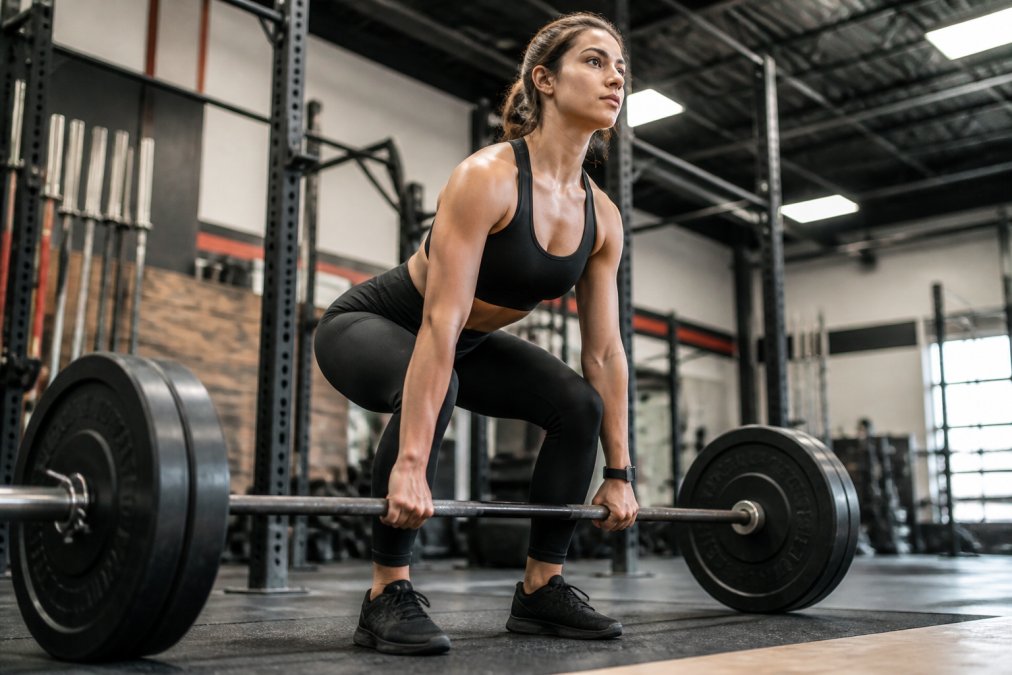
The design philosophy centers on supporting consistent training. Waistbands stay anchored through squat depth, seams dont dig into shoulders during front squats, and the fabric manages moisture without feeling clammy.
Iron Thread fabrics are chosen for their ability to hold compression fit over time, not just out of the package. A common industry complaint is leggings that lose elasticity within months; Iron Thread builds against that failure point.
Lululemon: Technical Fabrics That Last
Lululemon remains a benchmark for technical fabrics, particularly its proprietary Luxtreme material that delivers moisture-wicking and support during training. The brand offers high-rise waistband options for a secure fit during squats.
At around $88 for leggings, Lululemon sits at the premium end of the market, justified by excellent fabric longevity and a wide variety of fits. However, the brand is not specifically engineered for the friction of barbell work the way dedicated strength-focused brands are.
If you already own Lululemon pieces that have survived years of training, you understand the appeal. If you are looking for activewear for strength training specifically, check whether the style you are considering has reinforced seams in high-friction zones.
Women's Best and Nike Pro: Support and Compression
Women's Best and Nike Pro approach strength training apparel from different angles, but both deliver legitimate support. Women's Best uses sculpting fit technology to enhance muscle definition while providing high-support sports bras.
Nike Pro takes the compression route with Dri-FIT technology for sweat management and a compression fit designed to support muscle groups during explosive movements. Compression wear for strength training has documented benefits, including improved proprioception and reduced muscle oscillation.
Women's Best is for lifters who want a sculpting silhouette with high support, while Nike Pro is for athletes who prioritize compression stability. Women's Best has limited physical retail presence, and Nike Pro's compression fit runs tight, which some find restrictive during deep squats.
Budget Options: Colorfulkoala and All In Motion
Colorfulkoala and All In Motion prove that effective activewear for strength training does not require a premium budget. Colorfulkoala's Sculptiva collection includes hidden scrunch detailing and butt-lifting design technology, starting near $25.
All In Motion, Target's private-label line, starts around $15 and offers moisture-wicking fabric blends with four-way stretch, making it an accessible entry point for beginners.
The honest limitation is longevity. Budget fabrics typically show wear faster than premium options, particularly in high-friction zones. If you train three or more days per week, expect to replace budget pieces more frequently.
Splits59: Style Meets Performance
Splits59 combines vintage-inspired aesthetics with modern technical fabric performance. The brand uses high-performance stretch fabrics with moisture-wicking properties and ergonomic seams.
The starting price around $82 places it firmly in the premium category. However, the brand is not specifically optimized for the abuse of heavy barbell training.
If your training includes both strength sessions and lifestyle wear, Splits59 bridges that gap effectively.
Durable Gym Clothes for Lifting: What to Check
Durable gym clothes for lifting come down to specific, verifiable construction details. Fabric weight is the first indicator: heavier fabrics, typically 200 GSM and above, resist abrasion and maintain shape better.
Seam construction is the second critical factor. Flatlock seams reduce chafing and resist unraveling better than standard overlock stitching. Reinforced stitching in high-stress areas, particularly the crotch gusset and shoulder seams, extends garment life significantly.
The 50-Session Durability Test: What Actually Fails
Most activewear reviews are first impressions. The real test is what happens after 50 heavy lifting sessions, roughly four months of training three times per week. Here are the most common failure points:
1. Inner Thigh Abrasion
During deadlifts and sumo squats, the inner thighs rub together and against the bar path, making this the first zone to show pilling, then thinning, then holes. Look for a seamless inner thigh or a panel that wraps from the crotch gusset down the full leg.
2. Waistband Roll-Down Under Load
A waistband that stays put during a bodyweight squat may roll down the moment you add 135 pounds to your back. The fix is a waistband integrated into a heavier base fabric or one with a separate internal grip layer.
3. Shoulder Seam Digging
For front squats, overhead presses, and barbell rows, the bar rests on the upper back and shoulders. A seam running directly over the acromion process will create a pressure point and will fray from constant grinding. Raglan sleeves eliminate the shoulder seam entirely and are a superior choice for barbell work.
4. Knee Bagging
After repeated squat sessions, lower-quality leggings develop permanent bagging at the knees. This is a stretch-recovery failure: the elastane fibers fatigue and lose their ability to pull the fabric back to its original dimensions.
How to Inspect a Garment Before You Buy
You can evaluate durability in under two minutes without a single workout:
- The Rub Test: Take the fabric between your thumb and forefinger and rub vigorously for ten seconds. If you see any pilling or fuzzing, the fabric will not survive barbell contact.
- The Stretch-and-Release Test: Stretch the fabric to 50% of its resting length, hold for five seconds, release. If it does not snap back immediately, the elastane is already fatigued or low quality.
- The Seam Pull Test: Gently pull the fabric on either side of a seam. If you see gaps between the stitches or hear any popping, the seam tension is wrong and will fail under load.
- The Waistband Twist Test: Hold the waistband at both ends and twist in opposite directions. A well-constructed waistband will resist twisting; a cheap one will fold over easily, which is exactly what it will do under a heavy barbell.
The Cost-Per-Session Calculation
Budget gear has a place, but the math changes when you train consistently. A $25 pair of leggings that lasts 30 sessions costs about $0.83 per session; an $88 pair that lasts 150 sessions costs $0.59 per session. The premium option is actually cheaper over time if it survives.
The Environmental Angle Most Reviews Ignore
The durability question is also a sustainability question. The Federal Trade Commission's Green Guides note that environmental marketing claims must be substantiated, but the most honest environmental claim any activewear brand can make is simply that its products last longer. A garment that survives 150 sessions instead of 30 means fewer garments in landfills and less demand for virgin synthetic fibers. Polyester and nylon are petroleum-derived, and their production carries a significant carbon footprint. Extending the useful life of a single garment by even 50% reduces its per-use environmental impact substantially. When you choose gear built for 50-plus heavy sessions, you are making a choice that is both economically and environmentally sound. FTC's Green Guides on environmental marketing claims
Washing habits dramatically affect longevity. American Cleaning Institute's fabric care guidelines recommends washing activewear in cold water and air drying to preserve elastic fibers. Heat is the enemy of spandex and elastane, breaking down the fibers that provide compression fit and recovery. Many lifters ruin otherwise durable pieces by machine drying them on high heat every week. FTC's guide to understanding textile labeling also notes that care labels provide specific instructions for a reason, and following them extends the life of technical garments.
The benefits of compression wear for strength training extend beyond durability. Compression garments improve blood flow and reduce muscle oscillation during lifts, which can enhance performance and reduce soreness. When you invest in gear with proper compression fit, you are not just buying clothing, you are buying training support. National Strength and Conditioning Association resources on training apparel highlights that appropriate training gear contributes to both performance and safety during resistance exercise.
Frequently Asked Questions
What should I look for in activewear for strength training?
Focus on fabric weight, seam construction, and fit. For lifting, you need durable gym clothes that resist friction from barbells and won't stretch out. Check for a high waistband that stays put during squats and deadlifts. Look for four-way stretch that allows full range of motion without bagging. Seams should be flat to prevent chafing under the bar. A gusset adds durability. Moisture-wicking is important, but for strength training, durability and fit matter more than breathability.
Is compression gear beneficial for strength training?
Yes, compression wear for strength training offers several benefits. It provides muscle support and stability during heavy compound movements. The snug fit increases blood flow, which can improve performance. Many athletes find compression helps with body awareness, letting you feel when your form shifts. It also reduces muscle oscillation during lifts. For recovery after training, compression can help reduce soreness. Choose compression gear that feels firm but doesn't restrict your range of motion.
Why do my leggings lose shape after a few washes?
Fabric quality determines shape retention. Cheaper blends often use lower elastane percentages that break down quickly. Look for fabrics with at least 15-20% elastane or spandex. The knit construction matters too. Premium activewear uses denser knits that hold their structure. Wash in cold water and hang dry to extend the life of any activewear. Heat from dryers is the main culprit behind stretched-out waistbands and baggy knees. Our performance fabrics are engineered to resist this breakdown.
What is the difference between cardio and strength training activewear?
Cardio gear prioritizes breathability and moisture-wicking for high sweat output. Strength training gear needs thicker, more durable fabric that can handle friction from bars and benches. Cardio leggings are often lighter and more compressive. Lifting gear needs a secure waistband that won't roll during squats. The fabric should have some structure to support you under load. Look for abrasion-resistant material in high-contact areas. A gusset is essential for squats and lunges. Thermal regulation matters less than durability for lifting.
Are expensive activewear brands worth the higher price for lifting?
Price often correlates with fabric quality and construction. Premium brands use technical fabrics that hold shape longer and resist pilling. Budget options work but may show wear faster. If you train three or more times per week, investing in durable pieces saves money over time. A $90 pair of leggings that lasts two years costs less than three $30 pairs that wear out in four months. Check the fabric weight and elastane percentage. Heavier fabrics generally last longer under barbell friction.