
Table of Contents
- What Makes Workout Clothes Durable Enough for Heavy Lifting?
- Quick Comparison: Iron Thread Activewear Built for the Grind
- Best Fabric Blends for Weightlifting Apparel
- Squat-Proof Leggings for Powerlifting: What to Look For
- Reinforced Stitching, Gussets, and Abrasion Resistance
- How to Choose Gym Apparel for Weight Training
- How to Care for High-Performance Workout Gear
- Sustainability vs. Durability: The Real Trade-Off
- Budget-Friendly Hidden Gems That Hold Up
- Frequently Asked Questions
Last Updated: September 11, 2026
What Makes Workout Clothes Durable Enough for Heavy Lifting?
Durable workout clothes for heavy lifting are garments engineered to survive repeated friction, tension, and sweat without losing shape, stitching integrity, or fit. This guide from Iron Thread Activewear breaks down what actually holds up under a loaded barbell, and what quietly fails after a few weeks of serious training.
Most people buy gym apparel on how it looks in the mirror. That's the mistake. The forces that destroy workout clothes have nothing to do with aesthetics.
The Forces That Destroy Gym Apparel
Barbell knurling acts like sandpaper against your torso and thighs. Every squat rep drags a steel bar across fabric. Every deadlift pulls at shoulder seams. Every bench press grinds your back into a vinyl pad.
Add sweat, which weakens many fibers over time, plus repeated washing, and you get a garment that either holds its structure or turns into a stretched-out rag. Fit retention is the real test.
Construction Details That Actually Matter
Four things separate apparel that lasts from apparel that doesn't:
- Reinforced stitching at stress points: shoulders, gussets, and waistbands
- Four-way stretch fabric that recovers instead of sagging
- Gusset construction that prevents seam blowout in the crotch
- Abrasion-resistant face fabric that resists knurling friction
ASTM International textile test standards publishes the abrasion and tensile testing methods manufacturers use to grade fabric durability. Most budget activewear never gets tested against them.
Quick Comparison: Iron Thread Activewear Built for the Grind
Iron Thread Activewear builds every piece around the same premise: gear should show up when you do. Here's how the core training lineup compares.
| Product | Price | Fabric Strength | Best For |
|---|---|---|---|
| Do The Work Performance Tank | $35.00 | Lightweight, breathable, sweat-wicking | Heavy pressing days |
| Built Under Pressure Tank | $35.00 | 3.8 oz. performance knit | High-volume training |
| Lift Heavy Performance Tee | $32.00 | Durable, holds up rep after rep | Squat and deadlift sessions |
| Threads Performance Shorts | $32.00 | 9.25-inch inseam, secure waistband | Conditioning and leg day |
| Threads Performance Joggers | $43.00 | Moisture-wicking fleece | Recovery and layering |
The Do The Work Performance Tank is the pick for most lifters. It's cut sleeveless for unrestricted range of motion, and the sweat-wicking fabric keeps friction low against the bar.

Where it falls short: it's a tank, so it offers no shoulder coverage if you're doing barbell back squats with heavy knurling contact.
The Lift Heavy Performance Tee solves that. It's the one I'd grab for a squat session, because the unisex athletic fit stays put through the whole range of motion.
Best Fabric Blends for Weightlifting Apparel
The best fabric blends for weightlifting apparel combine nylon or polyester for tensile strength with a small percentage of spandex for stretch recovery. Pure cotton is the worst choice for heavy lifting: it absorbs sweat, gets heavy, and loses shape.
Nylon, Polyester, and Lyocell: What Each One Does
Nylon delivers the highest abrasion resistance of the common synthetics, which matters when a knurled bar is dragging across your chest. Its molecular structure includes amide linkages that resist the kind of mechanical scraping that breaks down weaker fibers. Polyester is the workhorse for moisture-wicking and quick-dry performance, and it resists pilling better than most alternatives because its fibers are inherently hydrophobic, they push sweat to the surface rather than absorbing it into the yarn. Lyocell, a plant-derived fiber, adds softness and breathability but has lower tensile strength on its own, so it works best blended rather than worn solo.
A typical performance blend runs roughly 80-90% synthetic with 10-20% elastane. That ratio is what gives you four-way stretch without sacrificing durability. Drop below 10% elastane and the fabric loses recovery, it stretches but doesn't snap back. Push above 20% and abrasion resistance starts to suffer because elastane fibers are weaker than nylon or polyester.
Abrasion Resistance: The Test That Actually Predicts Longevity
Most buying guides discuss durability in vague terms. The measurable standard is abrasion resistance, which is tested by rubbing fabric against a standardized abrasive surface until it fails. The two most common methods are the Martindale test, which rubs fabric in a circular pattern, and the Taber test, which uses a rotating wheel. Both produce a number, the higher the cycles before failure, the more durable the fabric.
Barbell knurling is essentially that test, run daily, against your chest and shoulders. A fabric that scores well on Martindale testing will hold up to knurling friction. A fabric that doesn't will pill and thin within weeks.
ASTM International textile test standards publishes the abrasion and tensile testing methods manufacturers use to grade fabric durability. Most budget activewear never gets tested against them.
Why Blend Ratios Matter More Than Fiber Names
A garment labeled "nylon" could be 95% nylon and 5% elastane, or 60% nylon and 40% cotton. The first will survive heavy lifting. The second will sag and pill. The blend ratio determines performance, not the fiber name on the tag.
Textile Exchange materials guidance notes that fiber blend ratios directly affect how a garment performs under repeated mechanical stress, which is why construction and blend matter more than marketing claims.
Squat-Proof Leggings for Powerlifting: What to Look For
Squat-proof leggings for powerlifting need three things: an opaque, high-gauge knit, a wide waistband that doesn't roll under a belt, and a gusset that eliminates the center seam. Anything less and you're adjusting mid-set.
The Squat-Depth Fabric Integrity Test
Most articles tell you to hold fabric up to a light source and stretch it. That's a start, but it doesn't replicate what happens at the bottom of a squat. A more accurate test: put the leggings on, get into your deepest squat position, and have someone check for sheerness from behind and from the side. Fabric that passes the hand-stretch test can still go sheer when it's wrapping around a loaded hip crease.
The reason is fabric weight. Lightweight knits under 200 GSM (grams per square meter) tend to go sheer under tension because the yarns are thin and the knit is open. Heavier knits, 240 GSM and up, maintain opacity because the yarns are denser and the structure is tighter. If a product page doesn't list fabric weight, that's a red flag for squat-proof claims.
Waistband Stability Under a Belt
Waistband stability matters just as much as opacity. A belt pressing down on a thin, elastic-only waistband causes it to fold and dig in. Look for a wide, layered waistband with flat seams. The best designs use a contoured waistband that's taller in the back than the front, which prevents gapping when you hinge for deadlifts.
A common pattern among powerlifters: waistbands that roll under a belt are usually under 2 inches wide and made from a single layer of elastic. Waistbands that stay put are typically 3-4 inches wide and use a double-layer construction with a silicone grip strip on the inside.
Gusset Construction and Seam Placement
The gusset is the diamond or triangular panel inserted at the crotch. It removes the center seam that blows out first in deep squats and sumo deadlifts. A well-constructed gusset uses flat-lock stitching and extends from the front rise to the back rise, distributing stress across a wider area.
Seam placement matters too. Leggings with a single center seam at the crotch will fail faster than those with a gusset, regardless of fabric quality. The seam becomes the weakest point because it concentrates stress in one line.
Squat-Proof Testing Standards: What to Look For
There's no universal "squat-proof" certification, but there are measurable standards that predict performance. Look for:
- Fabric weight of 240 GSM or higher
- Knit gauge that's tight enough to prevent light transmission when stretched
- Four-way stretch with at least 15% elastane for recovery
- Flat-lock or bonded seams at stress points
- Gusseted crotch with no center seam
For shorts-based training, the Threads Performance Shorts use a 9.25-inch inseam and a secure waistband designed to stay in place through full-depth movement. The flexible stretch handles a wide squat stance without binding.

Reinforced Stitching, Gussets, and Abrasion Resistance
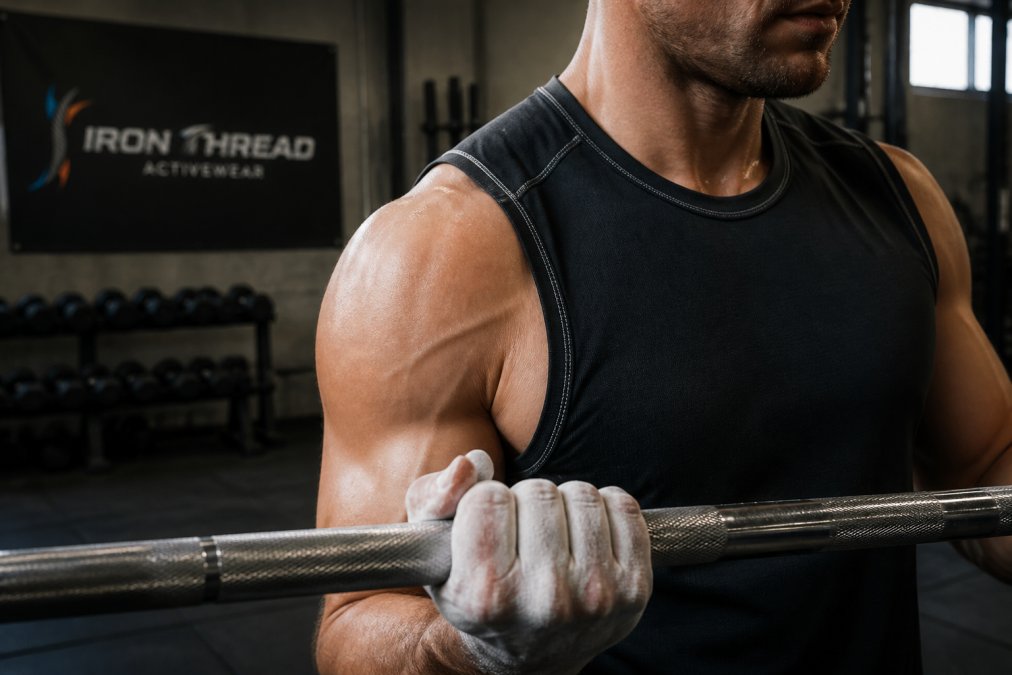
Reinforced stitching is the single strongest predictor of how long a piece of lifting apparel survives. Flat-lock and double-stitched seams distribute load across more thread, so a single point of failure doesn't unravel the whole garment.
Gussets matter for the same reason. A gusset is a diamond or triangular panel inserted at the crotch, and it removes the seam that blows out first in deep squats and sumo deadlifts.
Abrasion resistance is the angle most buying guides skip entirely. It's measured by rubbing fabric against a standardized abrasive surface until it fails. Knurling is essentially that test, run daily, against your chest and shoulders.
How to Choose Gym Apparel for Weight Training
Choosing gym apparel for weight training comes down to matching construction to the specific stresses of your program. A powerlifter and a CrossFit athlete need different things from the same category.
Work through this checklist before you buy:
- Fabric blend is at least 80% synthetic with 10-20% elastane
- Shoulder and side seams are flat-locked or double-stitched
- Crotch has a gusset, not a single center seam
- Waistband is wide and layered, not a thin elastic band
- Fabric passes the stretch-and-hold opacity test
- Tag or spec sheet references abrasion or tensile testing
Sizing and Fit for Different Body Types
Athletic fit is not a universal fit. Lifters with broader shoulders and thicker quads often need to size up in the chest and down in the waist, which most single-size charts don't accommodate.
The practical fix is to measure your chest, waist, and body length and compare against the actual spec sheet rather than a generic S/M/L label. Iron Thread Activewear publishes chest and body-length measurements per size on each product page, so you can match your real numbers instead of guessing.
If you're between sizes and you train in a belt, size up. A tight fit that feels fine standing still will bind the moment you brace.
How to Care for High-Performance Workout Gear
Caring for high-performance workout gear means washing cold, skipping fabric softener, and air-drying whenever possible. Heat is what kills elastane, and fabric softener coats the fibers that do the moisture-wicking.
- Wash in cold water on a gentle cycle
- Turn garments inside out to reduce surface abrasion
- Skip fabric softener and dryer sheets entirely
- Air-dry, or tumble on low heat only
- Wash immediately after heavy sweat sessions to prevent odor retention
The thing nobody tells you about performance fabric is that dryer heat degrades stretch recovery faster than anything else you do to it. A garment that sags after ten washes usually sagged because of the dryer, not the gym.
Sustainability vs. Durability: The Real Trade-Off
Sustainability and durability are usually framed as competing goals. They aren't, and treating them as opposites is the core mistake in most buying advice.
A garment that lasts three years instead of six months uses dramatically fewer resources per training session, regardless of what it's made from. The most sustainable piece of activewear is the one you don't have to replace.
That logic cuts against fast-fashion activewear directly. Cheap gear that pills, sags, and splits at the seam gets replaced constantly, and every replacement carries its own manufacturing and shipping footprint.
U.S. Environmental Protection Agency textile waste data tracks how much textile material enters the municipal waste stream each year, and apparel replacement is a meaningful contributor. Buying fewer, tougher pieces is the simplest lever most lifters have.
Where durability genuinely costs more: better fabric, reinforced construction, and testing all add to the price of a garment. That premium is the trade you're making, and it's usually worth it if you train consistently.
Budget-Friendly Hidden Gems That Hold Up
You don't need to spend the most to get gear that survives heavy lifting. The value picks live in the middle of the price range, where construction is solid but branding is minimal.
The Threads Performance Tank at $28.00 is the best value in the Iron Thread Activewear lineup. It's built from the same lightweight, breathable performance fabric as the higher-priced tanks, with a sleeveless cut for unrestricted movement and sweat-wicking comfort during training.
For tops, the Threads Performance Tee at $30.00 covers the same ground in a short-sleeve cut. Both are unisex athletic fits with a soft stretch feel, and both are built to last rather than built to a trend.

The Built To Endure Performance Tee at $32.00 is the step up if you want a slightly more durable handfeel for high-volume sessions. Same sweat-wicking comfort, same unisex athletic fit, built for the long haul.
Where budget picks fall short: color and print options are limited compared to the flagship pieces, so if you want a specific look, you may need to pay more for it.
Frequently Asked Questions
What fabric is best for heavy lifting workout clothes?
Synthetic blends built for performance hold up best. Polyester resists pilling and dries fast, nylon adds tensile strength and abrasion resistance, and a small percentage of spandex gives you four-way stretch. Lyocell blends add breathability and a soft feel. Look for moisture-wicking fabrics with reinforced stitching at stress points like shoulders and crotch gussets. Iron Thread Activewear uses lightweight performance fabrics across its tanks and tees designed to hold shape rep after rep.
Why do my workout leggings rip during squats?
Most leggings rip at the seams because the fabric lacks four-way stretch or the gusset construction is weak. When you hit depth in a squat, fabric at the crotch and inner thigh gets pulled in multiple directions. If the fabric has limited stretch or thin stitching, it fails. Look for squat-proof leggings with a gusseted crotch, high spandex content, and reinforced seams. Opaque, dense-knit fabrics also prevent the see-through problem that plagues lighter materials.
How do I maintain the durability of my performance gear?
Wash in cold water on a gentle cycle and skip the fabric softener, which clogs moisture-wicking fibers. Turn garments inside out before washing and air dry when possible. High heat breaks down spandex and weakens seams over time. If you must use a dryer, choose low heat. Also avoid washing with rough items like towels or jeans that cause abrasion in the drum. Following these steps keeps compression, fit retention, and sweat management working longer.
Are compression clothes better for heavy lifting?
Compression gear offers mild benefits for heavy lifting, mainly improved proprioception and reduced muscle oscillation during high-intensity training. It can help with muscle recovery between sessions. However, compression is not required for durability. Fit and fabric quality matter more. A well-constructed performance tank or tee with four-way stretch and moisture-wicking properties will outlast a cheap compression garment. Prioritize construction and fabric over compression claims alone.
How often should you replace your workout clothes?
Quality performance apparel should last one to two years with regular training and proper care. Signs it is time to replace: fabric loses shape after washing, seams fray, the waistband loses stability, or the material becomes transparent when stretched. Cheaper garments may need replacing every few months. Investing in durable fibers and reinforced stitching upfront reduces how often you buy replacements, which saves money over time.
Heavy lifting punishes gear that wasn't built for it, and replacing sagging, split-seam apparel every few months costs more than buying right once. Iron Thread Activewear builds performance apparel around premium fabrics, reinforced construction, and athletic fits designed to hold up rep after rep, from the $28.00 Threads Performance Tank to the $43.00 Threads Performance Joggers. Shop by collection and get gear that shows up when you do.