
STARTING POINT
Entering a gym for the first time or attempting to structure a fitness routine without prior experience creates friction. Information overload: endless online routines, conflicting advice, and complex splits: paralyzes beginners.
Progress does not require perfection or advanced programming. Progress requires a clear structure, repeatable habits, and the discipline to execute basic movements consistently. This framework removes guesswork, eliminates unnecessary complexity, and provides a direct path from uncertainty to execution.
CONSISTENCY OVER INTENSITY
Initial motivation fades quickly. Relying on high-intensity bursts or extreme daily workouts leads to burnout within weeks. Sustainable physical adaptation relies on frequency and adherence rather than maximum exertion on day one.
- Frequency: Training three days per week consistently yields superior results compared to attempting five days in week one and quitting in week two.
- Recovery: Muscle tissue repairs and grows during rest periods, not during the lifting session itself.
- Adherence: A simple, repeatable routine executed week after week outperforms an elaborate program abandoned after three days.
Building physical resilience requires showing up regularly. Equipping yourself with dependable apparel like the Show Up Anyway Unisex Activewear Tank Top reinforces the mental commitment to maintain consistency regardless of daily friction.

THE THREE-DAY FULL-BODY TEMPLATE
Beginners do not need body-part splits (such as chest day or leg day). Hitting each major muscle group multiple times per week accelerates neuromuscular adaptation and simplifies weekly planning.
A standard three-day full-body schedule provides optimal stimulus and recovery windows:
- Day 1: Full-Body Strength (Monday)
- Day 2: Rest or Light Movement (Tuesday)
- Day 3: Full-Body Strength (Wednesday)
- Day 4: Rest or Light Movement (Thursday)
- Day 5: Full-Body Strength (Friday)
- Day 6 & 7: Weekend Recovery (Saturday & Sunday)
This non-consecutive training structure ensures adequate recovery between heavy lifting sessions while establishing a predictable weekly rhythm.
STRUCTURING EACH WORKOUT
Every training session follows a modular sequence designed to maximize performance and minimize injury risk.
1. Warm-Up (5 to 10 Minutes)
- Dynamic Movement: Light walking, arm circles, leg swings, and bodyweight squats to elevate core temperature and lubricate joints.
- Purpose: Prepares connective tissue and central nervous system for load.
2. Main Strength Block (30 to 40 Minutes)
Focus exclusively on multi-joint compound movements that recruit large muscle groups simultaneously:
- Lower Body: Goblet squats, bodyweight squats, or light leg presses (2 to 3 sets of 8 to 12 repetitions).
- Push: Push-ups, dumbbell bench press, or machine press (2 to 3 sets of 8 to 12 repetitions).
- Pull: Cable rows, dumbbell rows, or assisted lat pulldowns (2 to 3 sets of 8 to 12 repetitions).
- Core: Planks or dead bugs (2 to 3 sets, 20 to 30-second holds or 10 controlled reps).
3. Cool-Down (5 Minutes)
- Static Stretching: Gentle elongation of worked muscle groups.
- Purpose: Lowers heart rate and initiates recovery.
For rigorous training sessions, functional garments engineered for durability: such as items from the Men's Training Collection and Women's Training Collection: deliver unrestricted mobility and moisture management.

GEAR FOR THE WORK
Apparel functions as equipment. Ill-fitting, low-quality clothing creates physical distraction during training. Premium activewear engineered for high-intensity movement ensures total focus on execution.
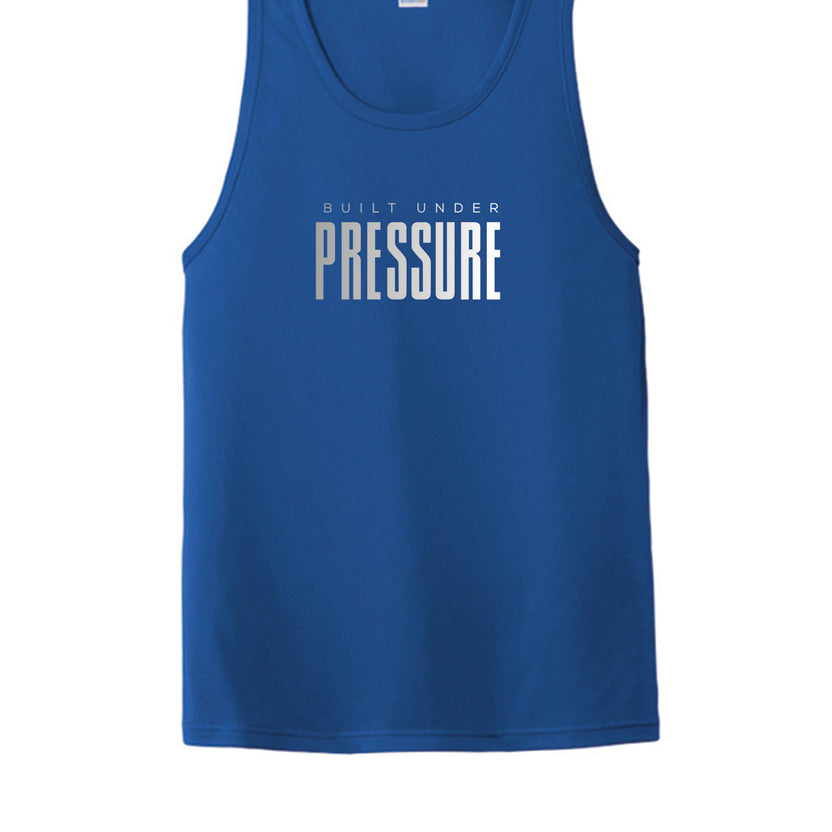
The Built Under Pressure performance philosophy emphasizes that resistance builds resilience. Wearing apparel designed to withstand intense friction and heavy loads reinforces the utilitarian mindset required for long-term progress.
PROGRESSION METRICS
Tracking progress prevents stagnation. Avoid random weight selection or changing exercises every session.
- Weight Progression: When all repetitions in all sets feel manageable with clean form, increase the resistance by 5 to 10 percent during the next session.
- Repetition Progression: If increasing weight is premature, add one or two repetitions per set until reaching the upper end of the target range (12 reps), then increase the load.
- Form Integrity: Never sacrifice movement quality for heavier weight. Controlled eccentric phases and strict execution build structural integrity.

SUMMARY
Starting a workout schedule requires ignoring complexity and focusing on fundamentals. Three full-body sessions per week, compound movements, progressive overload, and consistent attendance form the foundation of physical strength.
Show up. Execute the protocol. Repeat.