
A moisture-wicking workout shirt moves sweat away from the skin, spreads it across the fabric, and helps it dry faster. That is the useful definition. The label alone means very little without the right fiber, knit, fit, and construction.
For everyday lifting, the best shirt is not always the lightest or most technical option. It is the one that stays comfortable through warm-ups, working sets, long rest periods, repeated washing, and the next session.
WHAT MOISTURE-WICKING MEANS
Sweat starts against the skin. A performance fabric pulls that moisture into the fibers and moves it toward the outside surface. Once spread across a larger area, the moisture can evaporate more efficiently.
This differs from simple absorption.
Cotton absorbs sweat like a towel. A technical synthetic fabric is designed to move sweat through the garment instead of holding all of it in one saturated area. The result is less cling, less weight, and faster drying between sets.
Common moisture-managing fibers include:
- Polyester: Lightweight, fast-drying, and common in high performance activewear.
- Nylon: Strong, smooth, and resistant to abrasion. Often blended with stretch fibers.
- Elastane or spandex: Adds stretch and recovery. It does not provide the primary wicking function by itself.
- Merino wool blends: Moisture-managing and naturally more resistant to odor, though usually more expensive and slower to dry than thin synthetics.
A proper moisture wicking gym wear system also depends on the knit. An open or textured knit can increase airflow. A dense knit may feel more substantial and resist abrasion but can hold more heat.
COTTON IS NOT AUTOMATICALLY BAD
100% cotton works well for low-sweat training, warm-ups, walking, casual wear, and short sessions. Cotton also has a familiar, soft feel that many lifters prefer.
The failure point appears when the session creates more sweat than the shirt can manage.
Cotton becomes a problem during:
- High-volume leg training
- Humid or poorly ventilated gyms
- Long lifting blocks
- Conditioning after strength work
- Back-to-back wear
- Sessions requiring repeated bench or mat contact
Once saturated, cotton gets heavier and stays wet longer. It can cling across the back, bunch beneath a belt, and feel cold during rest periods. A cotton-rich blend may behave similarly if cotton makes up most of the fabric.
That does not make cotton useless. It makes cotton a poor default for heavy sweat sessions. Match the shirt to the workload.
For a direct comparison, read Moisture-Wicking vs. Cotton for Heavy Lifting.
READ PAST THE MARKETING
A product page should provide enough information to evaluate the garment before purchase. “Performance,” “technical,” and “athletic” are not specifications.
Check the following.
FIBER CONTENT
The fiber percentage should be listed clearly. Polyester- or nylon-based blends are usually more reliable for sweat-heavy lifting than cotton-dominant fabrics.
A small amount of spandex can improve mobility and recovery. Too much stretch without enough structure may cause the shirt to lose its shape.
KNIT OR WEAVE
Most workout shirts use knitted fabric because knit construction provides stretch and movement. Look for a surface that feels consistent, without thin spots or loose loops.
A textured or mesh knit can improve airflow. A tighter, denser knit may provide more resistance against bar contact. Neither is automatically better. The correct choice depends on training demands.
FABRIC WEIGHT
Lightweight fabric dries quickly and works well in hot gyms. Medium-weight fabric can provide better coverage and durability during lifting.
Heavy fabric is not automatically heavy duty. If it traps heat, restricts shoulder movement, or stays wet, additional weight adds little value.
STRETCH AND RECOVERY
Stretch the fabric gently. It should move without feeling brittle, then return close to its original shape.
After repeated use, a quality shirt should maintain:
- Neckline shape
- Shoulder position
- Hem length
- Sleeve structure
- Overall width
Shape retention matters more than a strong first impression. Check how the garment behaves after approximately 20 washes, not only on the first try-on.
SEAMS AND LABELS
Flatlock or low-profile seams reduce raised edges that can rub against the shoulders, upper back, or underarms. Clean stitching and reinforced stress points improve durability.
Tagless or printed labels reduce neck irritation. A scratchy label can become a constant distraction during long sessions.
These details also matter in heavy duty workout clothes. The durability guide covers abrasion, stitching, shape retention, and wash durability. This guide focuses on the moisture-management side of the same decision.
TEE OR TANK FOR LIFTING
A breathable gym tank top can be useful. It is not automatically better for every lift.
TANKS
Tanks provide more airflow around the chest, shoulders, and underarms. They can make pressing and upper-body training feel less restricted. Many lifters prefer a tank for bench press, dumbbell work, machines, and warm gyms.
The tradeoff is exposure. Wider arm openings may allow more contact with a bench or machine. Loose fabric can also shift during pressing or overhead movement.
A racerback tank should sit securely across the upper back without pulling into the neck. The upper-chest icon placement should remain centered and the straps should not cut into the shoulder.
TEES
A short-sleeve tee provides more coverage against bench surfaces, rough pads, and barbell knurling. That matters during squats, deadlifts, rows, and movements where the upper back or shoulders contact equipment.
Sleeve fit is important. Sleeves should allow shoulder mobility without folding tightly into the armpit. Excessively loose sleeves can catch on equipment. Tight sleeves can restrict pressing and overhead range.
Back-of-shoulder chafing is another reason some lifters squat in a tee. A stable sleeve and smooth shoulder seam can reduce friction where the bar, shirt, and upper back meet.
A practical rotation is simple: tank for bench or high-heat sessions, tee for squats, pulls, and barbell work. The right choice depends on equipment, movement, and personal comfort.

FIT AND SIZING
A moisture-wicking workout shirt needs consistent contact with the skin without becoming restrictive.
Too loose:
- Holds damp air against the body
- Bunches beneath a lifting belt
- Rides up during overhead work
- Creates excess fabric around the bar path
Too tight:
- Pulls across the chest and upper back
- Restricts shoulder movement
- Increases seam tension
- Can hold sweat against the skin
For unisex sizing, compare chest, shoulder, and garment-length measurements instead of relying on the usual T-shirt size. Unisex cuts may have broader shoulders, longer hems, or a straighter torso shape than women’s-specific garments.
During a fitting, raise both arms overhead, hinge at the hips, reach forward, and rotate the shoulders. The shirt should stay near the waist, cover the back, and avoid bunching beneath a belt.
A good lifting shirt should sit flat at the shoulders, leave room across the upper back, and maintain coverage during a squat or press.
Use the complete guide to choosing performance activewear for a broader review of fabric, fit, seams, and training use. New lifters can also start with beginner strength-training guidance before building a full training wardrobe.
WASH IT WITHOUT WRECKING IT
Performance fabric needs basic care.
- Wash cold.
- Turn garments inside out.
- Use a mild detergent.
- Skip fabric softener.
- Skip dryer sheets.
- Air dry whenever possible.
- Remove damp clothing from the washer promptly.
- Keep rough zippers and abrasive items away from the fabric.
Fabric softener and dryer sheets can leave a coating on synthetic fibers. That coating may reduce moisture movement and increase odor retention. High dryer heat can also damage stretch fibers and reduce shape recovery.
Avoid wearing a damp shirt again without washing it. Back-to-back wear traps sweat, skin oils, and odor in the fabric. Good care protects both performance and gym consistency.
THE STORE CHECKLIST
Before buying a moisture-wicking workout shirt, check:
- Fiber content is listed.
- Polyester or nylon leads the blend for sweat-heavy training.
- Stretch returns after pulling the fabric.
- Fabric weight matches the gym environment.
- Knit texture supports airflow or abrasion resistance.
- Seams are flat, clean, and secure.
- Neck and shoulder construction feel smooth.
- Label placement will not irritate the neck.
- Hem stays down during overhead movement.
- Fabric will not bunch under a lifting belt.
- Product reviews mention performance after repeated washing.
- Care instructions exclude fabric softener and high heat.
IRON THREAD OPTIONS
Iron Thread’s in-house options meet the basic moisture-management criteria for regular training.
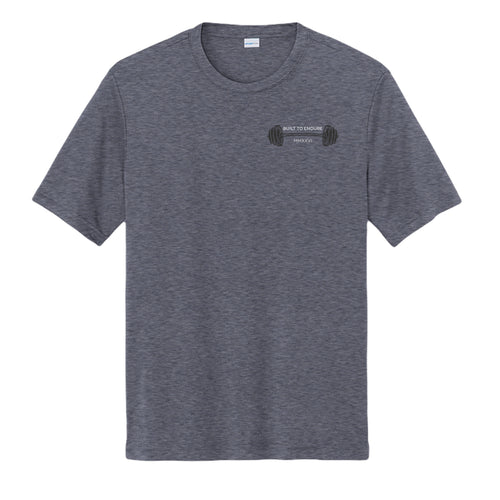
BUILT TO ENDURE PERFORMANCE TEE: $32
A moisture-wicking performance tee for lifting, conditioning, and repeat gym use. A standard short-sleeve cut provides coverage for barbell work and equipment contact. Check the product page for current sizing, color, and availability.
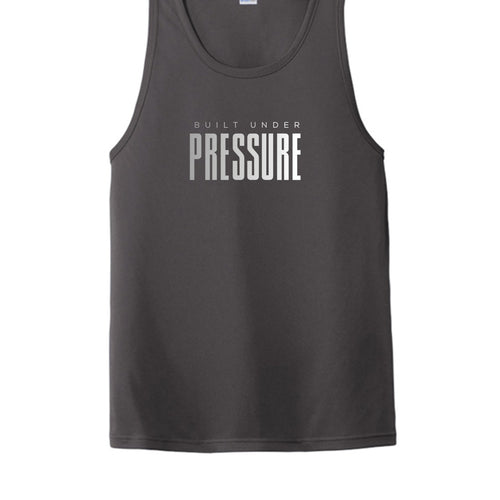
BUILT UNDER PRESSURE PERFORMANCE TEE: $32
A moisture-wicking tee for high-output training and everyday lifting. Built Under Pressure remains within the Iron Grey, charcoal, and black palette. Use a tee when coverage and stable fabric placement matter more than maximum airflow.
BUILT UNDER PRESSURE PERFORMANCE TANK: $35
A moisture-wicking tank for warm gyms, pressing, conditioning, and sessions requiring more upper-body airflow. The listed Iron Grey option keeps the design functional and restrained.
No shirt fixes a failed workout. No fabric replaces a training plan. The useful garment removes friction: less cling, less bunching, less distraction, and less reason to skip the next session.
Show up. Train. Wash. Repeat. Small victories count. A completed warm-up, a return after time away, or one controlled extra repetition all support gym consistency.