
Missing a workout happens. Work runs late. Sleep falls apart. Family needs attention. Energy disappears. Gym anxiety returns. A session gets skipped.
That missed workout does not erase previous progress. It does not define fitness level. It does not mean the routine has failed.
The real risk is the story that follows:
“The week is ruined, so there is no point returning.”
Reject that story. One missed workout is a gap in the schedule, not a failure in the gym. The next decision matters more than the missed session.
Use the following system to return without punishment, cramming, or all-or-nothing thinking.
1. RESET THE DEFINITION OF FAILURE
A missed workout is information. It shows that something interrupted the plan. It does not prove a lack of discipline.
Fitness consistency is not built by completing every planned session under perfect conditions. It is built by returning after disruptions. Long-term gym consistency depends on the ability to restart without turning one missed day into one missed month.
Avoid compensating with:
- An excessively long workout
- Double sessions
- Unplanned heavy lifting
- Severe food restriction
- Extra cardio as punishment
- Negative self-talk
Treat the missed session as a rest day unless illness, injury, or unusual symptoms require additional caution. General fitness education cannot replace individualized medical advice. Stop training and seek guidance from a qualified healthcare professional when pain, injury, dizziness, chest pain, or other concerning symptoms are present.
A useful reset statement:
“The workout was missed. The routine remains active. The next session is the priority.”
2. APPLY THE NEVER-MISS-TWICE PRINCIPLE
The rule is simple:
Missing once is allowed. Missing twice requires a response.
The never-miss-twice principle does not demand a perfect workout the next time. It demands contact with the habit. The next session can be short, light, or modified. The objective is to prevent avoidance from becoming the new routine.
Choose the next training time immediately. Make the decision specific:
- Tuesday at 6:30 p.m.
- Thursday before work
- Saturday at 10:00 a.m.
Avoid vague plans such as “soon” or “later this week.” Specific times reduce decision-making and help answer the question of how to stay consistent working out.
The next session only needs to restore momentum. A short return still counts.
3. USE THE FLOOR-AND-CEILING METHOD
A routine with only one acceptable version is fragile. A routine with two levels is more durable.
THE FLOOR: MINIMUM-VIABLE SESSION
The floor is the smallest workout that keeps the habit alive. It should be short, clear, and realistic on a low-energy day.
Example floor session:
- 3 minutes of easy walking
- 2 rounds of 8 bodyweight squats
- 2 rounds of 5 incline push-ups
- 20-second plank
- 2 minutes of easy movement to finish
Total time: approximately 10 minutes.
The floor may also be a short walk, light mobility work, or a reduced version of the scheduled workout. The purpose is not maximum training effect. The purpose is keeping the return simple enough to complete.
THE CEILING: IDEAL WORKOUT
The ceiling is the full session planned for a day with adequate time, energy, and recovery.
For a beginner, that may include:
- 5–10 minutes of warm-up
- 25–35 minutes of basic strength training
- 5 minutes of cool-down
- Controlled effort with clean form
The ceiling is an option, not a requirement for consistency. A floor workout is not a lesser form of discipline. It is a practical tool for protecting the habit when conditions are not ideal.
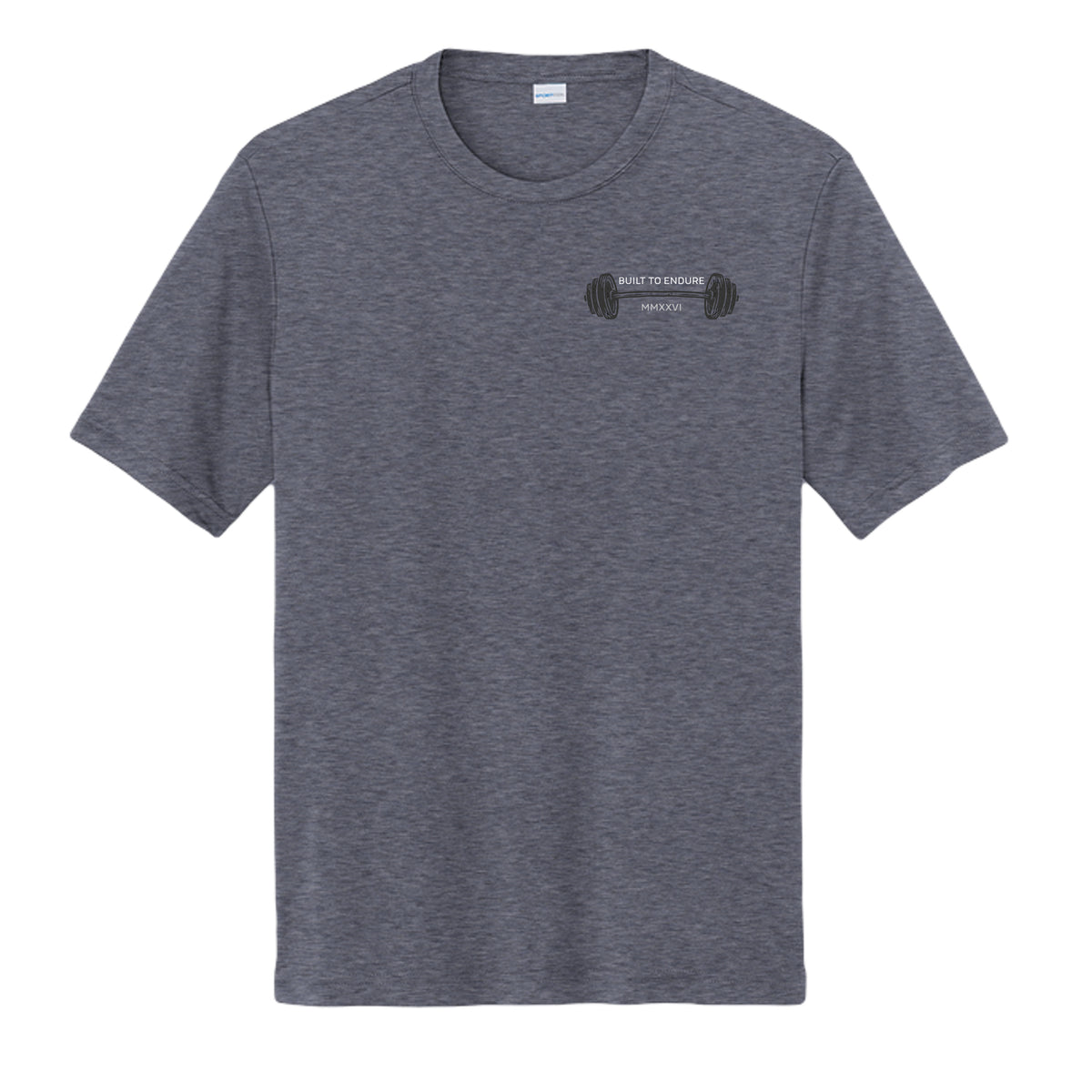
The Built To Endure Unisex Activewear T-Shirt is purpose-built for this approach. Lightweight, breathable, sweat-wicking, and cut for movement, it helps reduce friction between deciding to train and starting the session.
4. RESCHEDULE WITHOUT CRAMMING
A missed workout does not need to be forced into the next available hour. Cramming sessions together can create unnecessary fatigue and reduce the quality of the remaining week.
Consider a beginner following a three-day schedule:
- Monday: Full-body strength
- Wednesday: Full-body strength
- Friday: Full-body strength
IF MONDAY IS MISSED
Do not complete workouts on Tuesday, Wednesday, and Thursday to “catch up.”
Use this schedule instead:
- Tuesday: Rescheduled Day 1
- Thursday: Day 2
- Saturday: Day 3
The weekly rhythm shifts by one day while preserving recovery between sessions.
IF WEDNESDAY IS MISSED
If Monday was completed, continue with:
- Thursday: Rescheduled Day 2
- Saturday: Day 3
There is no requirement to add an extra workout. The missed session has been moved, not multiplied.
IF FRIDAY IS MISSED
Return to the next Monday session. Use the weekend for recovery, walking, or light movement if desired. Do not turn Monday into a punishment workout.
The goal is not to force three sessions into a calendar week at any cost. The goal is to protect the pattern over several weeks. A three-day routine completed consistently across a month is more useful than a rushed schedule that creates exhaustion and another missed session.
For a clear starting structure, use the simple beginner workout schedule. The schedule already provides the basic framework. The floor-and-ceiling method adds flexibility when real life disrupts the plan.
5. IDENTIFY THE REAL REASON THE SESSION WAS MISSED
A missed workout becomes useful when the cause is identified without judgment.
Ask one direct question:
What actually stopped the session?
TIME
The workout may have been too long for the available schedule.
Adjustment:
- Reduce the ceiling from 60 minutes to 35 minutes
- Prepare a 10-minute floor session
- Choose a fixed training window
- Keep a backup home session available
LOW ENERGY
The program may be too demanding, sleep may be inadequate, or recovery may be overlooked.
Adjustment:
- Lower the training volume
- Use the floor session
- Keep the effort moderate
- Review sleep, hydration, meals, and rest days
GYM ANXIETY
Returning after a missed workout can feel harder than starting from zero. The gym may seem more intimidating because the mind turns the absence into a public failure.
It is not public failure. Most people in the gym are focused on their own training.
Reduce uncertainty:
- Go during a quieter time
- Follow a short written plan
- Start with familiar machines
- Set a 15-minute target
- Leave after completing the floor if needed
The gym anxiety guide covers practical ways to enter the gym with less uncertainty. The objective is exposure through manageable action, not instant confidence.
AN OVERLY AMBITIOUS PLAN
Repeatedly missing sessions may indicate a programming problem rather than a character problem.
A five-day plan may not fit a beginner with a full schedule. A 90-minute workout may be unrealistic. A program built around maximum intensity may create soreness that interferes with the next session.
Scale the plan before abandoning it. Three manageable workouts are enough to build a foundation.
PAIN OR ILLNESS
Pain, injury, fever, dizziness, chest pain, or unusual symptoms require caution. Do not use the never-miss-twice principle to override medical concerns. Recovery and professional guidance take priority.
6. REMOVE FRICTION BEFORE THE NEXT SESSION
Consistency improves when fewer decisions stand between the plan and the workout.
Prepare the night before:
- Place training clothes where they are visible
- Pack shoes, headphones, and water
- Write the exact exercises in advance
- Set a calendar reminder
- Choose the minimum session before the day begins
- Put the first exercise where it can start immediately
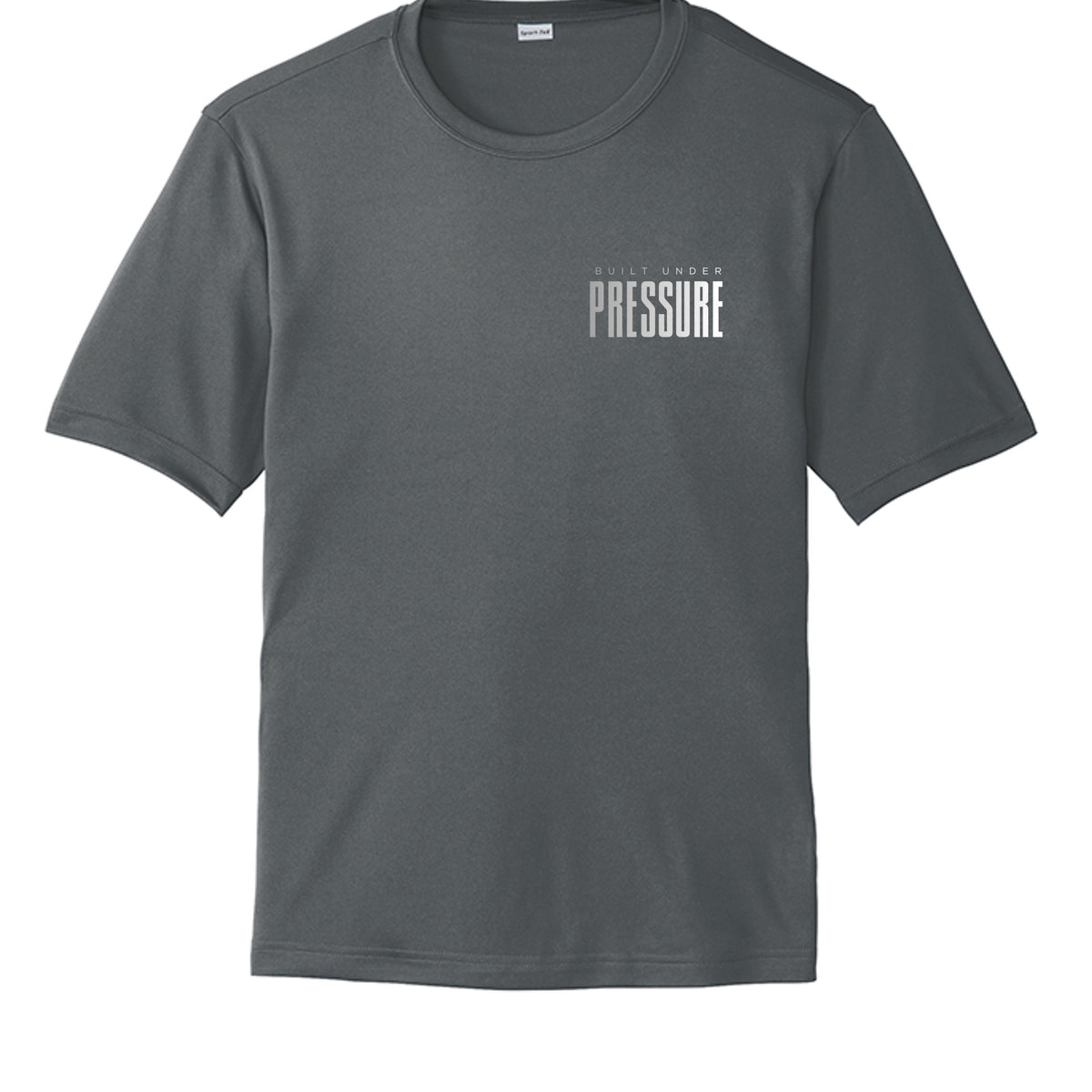
Purpose-built gear can also remove small barriers. The Built Under Pressure Unisex Activewear T-Shirt is designed with lightweight, breathable, sweat-wicking performance and a clean athletic fit. The apparel does not replace discipline. It supports the transition into action by keeping training equipment simple, reliable, and ready.
The discipline guide explains the larger principle: motivation changes, but systems create repeatable behavior.
7. CELEBRATE THE RETURN
The return is the win.
Do not wait for a heavier lift, a faster mile, or a visible physical change before recognizing progress. Small fitness victories build the evidence required for long-term confidence.
Record the return:
- “Completed the floor session”
- “Entered the gym after missing Wednesday”
- “Finished two sets with controlled form”
- “Rescheduled instead of quitting”
- “Returned without punishment”
A workout log can use three simple marks:
- F: Floor completed
- C: Ceiling completed
- R: Returned after a missed session
The R matters. It documents overcoming failure in the gym before failure has a chance to become an identity.
Celebrate fitness progress by tracking actions within control:
- Showing up
- Completing the planned minimum
- Using better form
- Recovering properly
- Returning after disruption
- Staying with the routine for another week
Small fitness victories are not consolation prizes. They are the building blocks of fitness consistency. The person who returns repeatedly develops more strength, confidence, and capacity than the person waiting for perfect conditions.
THE NEXT SESSION IS THE TARGET
One missed workout is not the end of a routine. It is a normal interruption that requires a simple response:
- Acknowledge the missed session.
- Reject punishment and all-or-nothing thinking.
- Schedule the next workout.
- Use the floor if the ceiling feels unrealistic.
- Reschedule without cramming.
- Identify the real barrier.
- Record the win of returning.
Gym consistency is not perfection. It is repeated recovery from imperfection.
Show up for the next session. Complete what fits the day. Build the pattern again.
This article provides general fitness education and is not individualized medical advice. Consult a qualified healthcare professional for guidance related to pain, injury, illness, medical conditions, or changes to physical activity.