
Table of Contents
- Why Workout Leggings Lose Elasticity Over Time
- How to Wash Workout Leggings Without Damaging Fabric
- How to Dry Athletic Wear Properly to Maintain Shape
- Best Fabric for Durable Gym Leggings and Shape Retention
- Proper Storage Techniques to Prevent Stretching
- Choosing the Right Size to Prevent Sagging and Rolling
- Fixing Leggings That Have Already Stretched Out
- Troubleshooting Waistband Sagging and Rolling Down
- Common Mistakes That Accelerate Stretching
- Frequently Asked Questions
Last Updated: September 20, 2026
Why Workout Leggings Lose Elasticity Over Time
Workout leggings stretch out because the synthetic fibers that give them shape gradually lose their ability to bounce back. When you wear leggings repeatedly and wash them, the spandex and elastane fibers that provide compression and stretch recovery get stressed. Over time, they fatigue and stop contracting the way they should.
The culprit isn't always obvious. Most people blame one wash or one workout. The truth is more complex. Elasticity loss happens through a combination of factors: heat exposure, harsh detergents, improper drying, and incorrect storage all accelerate the breakdown. Even high-quality fabrics with strong spandex content will deteriorate faster if you don't care for them properly.
Understanding how to prevent workout leggings from stretching out matters because once elasticity is gone, it's nearly impossible to restore. Prevention is everything. The good news: you can dramatically extend the life of your leggings by addressing the specific factors that cause fiber breakdown. Iron Thread Activewear's Threads Collection is engineered with premium synthetic fibers, but even the best fabrics need proper care to maintain their shape and compression.

How to Wash Workout Leggings Without Damaging Fabric
Washing is where most damage happens. The way you clean your leggings determines whether they'll fit like new in six months or feel baggy in six weeks. The key is being gentle with the fabric while still removing sweat and bacteria.
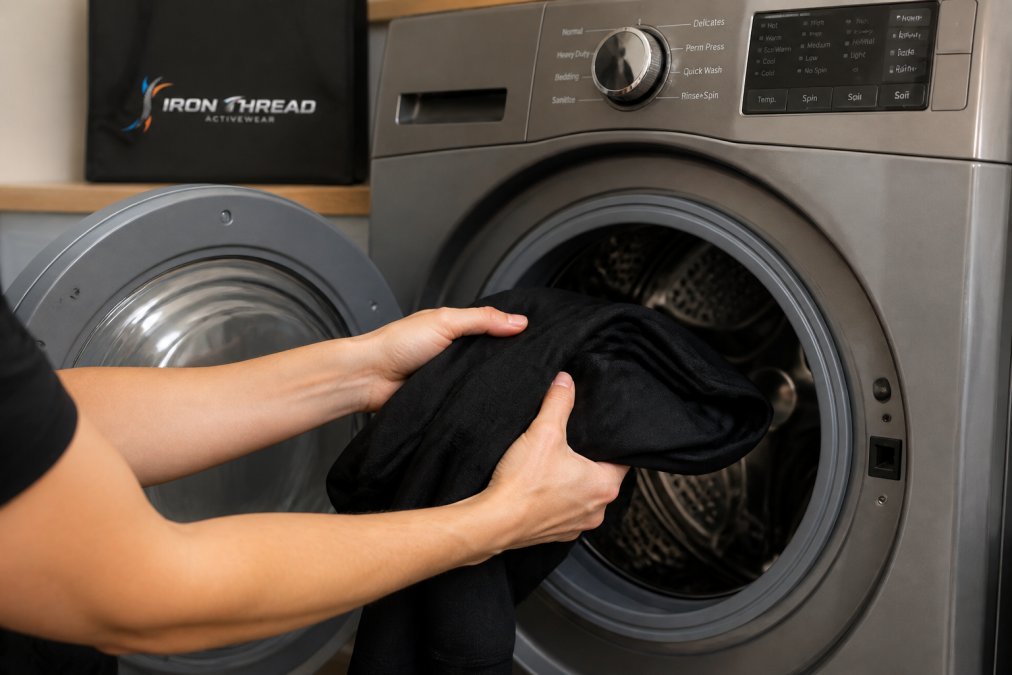
Cold Water Washing and Gentle Cycles
Cold water is non-negotiable. Hot water opens the fibers and makes them more susceptible to stretching. Cold water keeps the synthetic fibers tight and resistant to deformation.
Always use the gentle or delicate cycle on your washing machine. This means slower agitation and shorter spin times. Your leggings don't need the same treatment as your towels or jeans. A gentle cycle protects the waistband, seams, and fabric integrity.
Load the machine loosely. Cramming leggings in with heavy items like jeans creates friction that accelerates pilling and stretching. Wash them separately or with lighter items like shirts and socks.
Turn your leggings inside out before washing. This protects the outer surface from abrasion and helps preserve the finish that resists moisture-wicking performance.
Detergent and Fabric Softener Mistakes to Avoid
Fabric softener is your enemy. It coats synthetic fibers with a waxy residue that breaks down their elasticity. Over time, this coating prevents the spandex from contracting properly. Skip it entirely.
Use a mild detergent designed for delicates or athletic wear. Regular laundry detergent is too harsh. Look for products labeled for performance fabrics or activewear. The formula should be gentler on the fibers while still cleaning effectively.
Less detergent is better. Use about half the amount you normally would. Excess detergent leaves residue that builds up in the fabric and accelerates degradation. Your leggings don't get that dirty, sweat and light soil don't require heavy-duty cleaning.
Avoid bleach and oxygen-based stain removers. These break down synthetic fibers chemically. If you have a stain, treat it gently with a small amount of mild soap and cold water before washing.
How to Dry Athletic Wear Properly to Maintain Shape
Drying is where heat damage happens. High heat destroys the molecular structure of spandex and elastane. One dryer cycle can undo months of careful washing.
Air Drying vs. Tumble Dry
Air drying is the only safe option for preserving elasticity. Lay your leggings flat on a clean, dry surface or hang them on a drying rack. Avoid direct sunlight, which can fade colors and degrade some synthetic materials.
If you hang them, use a flat drying rack rather than a hanger. Hangers create stress points and can cause stretching, especially at the waistband where tension is highest. Flat drying distributes weight evenly.
Never use a tumble dryer. Even low heat settings damage synthetic fibers. The agitation combined with any heat accelerates fiber breakdown. A single dryer cycle can permanently reduce the elasticity your leggings started with.
Drying typically takes 8-12 hours depending on humidity and airflow. Plan ahead so you're not tempted to speed up the process with heat.
Heat Damage and Fiber Breakdown Prevention
Heat is cumulative. Every time spandex or elastane is exposed to warmth, the fibers lose some ability to recover. This happens gradually, but it adds up fast.
Keep leggings away from radiators, heating vents, and direct sunlight while drying. These create localized heat zones that damage fibers unevenly. A cool, well-ventilated room is ideal.
Don't iron your leggings. The direct heat will melt synthetic fibers and create permanent damage. If you need to remove wrinkles, hang them in a steamy bathroom instead, the moisture and gentle heat from steam is far less damaging than an iron.
Best Fabric for Durable Gym Leggings and Shape Retention
Not all leggings are built the same, and the fabric composition determines not only how well your leggings resist stretching but also what care approach will protect them best. Understanding your leggings' fiber blend is the foundation of effective maintenance.
Spandex and Elastane: The Recovery Fiber
Spandex and elastane are identical, different brand names for the same synthetic elastic fiber. This is what gives leggings their stretch and recovery. Higher spandex content means better elasticity and shape retention, but only if paired with quality base fibers.
Look for leggings with 15-20% spandex content. This is the performance sweet spot. Less than 10% and the leggings won't have enough elasticity for compression or recovery. More than 20% can create a clingy, uncomfortable feel and doesn't improve durability, it can actually make the fabric more prone to pilling because the base fibers are stretched thinner.
The source of the spandex matters significantly. Premium spandex from established manufacturers holds its shape longer than budget alternatives.
Nylon/Spandex Blends vs. Polyester/Elastane Blends: Care Differences
This is where most articles fall short. The base fiber paired with spandex determines how the leggings respond to washing, drying, and storage, and therefore what care approach will extend their life.
Nylon/Spandex Blends: Nylon is softer and more comfortable against skin but more prone to stretching over time, especially when exposed to heat or repeated washing. Nylon absorbs moisture more readily than polyester, which means it takes longer to dry and is more vulnerable to mildew if stored damp.
For nylon-blend leggings, air drying is non-negotiable, never use a dryer, even on low heat. Nylon fibers weaken when exposed to warmth. Wash in cold water only, and consider washing less frequently (every 2-3 wears rather than after each workout) to minimize cumulative fiber stress. Store nylon leggings in a cool, dry location away from direct sunlight, which can cause yellowing and fiber degradation over time.
Polyester/Elastane Blends: Polyester is more durable and moisture-resistant than nylon, which is why many premium performance leggings use polyester as the base. Polyester dries faster, resists mildew, and holds its shape better through repeated washing. However, polyester can pill more easily if subjected to friction, and it can feel less soft initially.
Polyester-blend leggings are more forgiving with care but still require cold water washing and air drying. The advantage is that polyester is less vulnerable to heat damage, so if you accidentally use warm water or a low-heat dryer, the damage is typically less severe than it would be with nylon. That said, cold water and air drying remain the best practice for maximum longevity.
Denier Weight and Weave Density
Denier refers to the thickness of the fibers used in the fabric. Higher denier fabrics are thicker and more durable. For leggings, 200-300 denier is the ideal range. This creates enough density to resist pilling and stretching without feeling heavy or restrictive.
Lower denier (under 150) leggings feel lighter and more breathable but stretch out faster because the fibers are thinner and more prone to fatigue. Higher denier (over 350) leggings are more durable but can feel heavy and may trap heat during intense workouts.
The weave matters equally. A tight, high-quality weave creates better shape retention than a loose weave. When you try on leggings, feel the fabric between your fingers. Premium leggings feel substantial and structured; budget alternatives often feel thin or flimsy. A dense weave also resists pilling better because the fibers are held tightly together and less likely to snag or break.
Identifying Quality Construction
Beyond fiber content, construction quality determines durability. Look for flat-lock seams (seams that lie flat against the skin rather than raised) because they resist stretching and pilling better than standard seams. The waistband should feel reinforced and supportive, not thin or stretchy on its own.
Check the stitching around the leg openings and waistband. Tight, even stitching indicates quality control; loose or uneven stitching suggests the garment may not hold up through repeated wear and washing. Premium leggings like Iron Thread Activewear's Threads Women's Performance Leggings use reinforced waistband construction and high-quality stitching.
When shopping, compare leggings side by side. Stretch a section of fabric gently and release it. Quality leggings snap back immediately; lower-quality alternatives recover slowly or not at all. This simple test reveals how well the spandex and base fibers are engineered to work together.
Proper Storage Techniques to Prevent Stretching
How you store your leggings between workouts affects their longevity. Poor storage creates permanent stretching and shape loss.
Fold leggings rather than hang them. Hanging creates stress on the waistband and leg openings, causing them to stretch out of shape over weeks and months. Fold them neatly and stack them in a drawer.
Threads Women's Performance Leggings →
Store them in a cool, dry place away from heat sources. Attics, basements near furnaces, and sunny windowsills are all problematic. A bedroom drawer or closet is ideal.
Don't store leggings in a compressed ball or crumpled pile. Smooth them out as you fold them. Wrinkles and creases become permanent if left long enough, especially in synthetic fabrics.
Keep them away from rough surfaces and items that could snag the fabric. A dedicated drawer or shelf prevents friction damage.
Choosing the Right Size to Prevent Sagging and Rolling
Size is foundational to fit integrity. Too large and your leggings will sag and roll down no matter how well you care for them. Too small and you'll stretch the fabric constantly just by wearing them.
The waistband should sit snugly without digging in. If it's loose enough to move around, the leggings are too big. If it leaves marks or feels restrictive, they're too small.
Check the inseam measurement. Leggings that are too long bunch at the ankles and create tension on the fabric. Too short and you'll be pulling them up constantly, which stretches the waistband. Iron Thread Activewear's Threads Women's Performance Leggings come in a 25" inseam length.
The rise, how high the waistband sits, affects how well leggings stay in place. High-rise leggings (typically 10-12 inches) provide more support and are less likely to roll down during movement. This reduces constant tension on the fabric.
Try leggings on before buying. Fit is personal and varies by body shape. What works for one person won't work for another. A proper fit prevents the constant stretching that happens when you're adjusting leggings throughout your workout.
Fixing Leggings That Have Already Stretched Out
Once elasticity is truly gone, full recovery is impossible. However, depending on where and how severely the stretching occurred, you have options that can extend the life of your leggings or restore them to limited use.
Assessing the Damage
First, determine whether repair is worth the effort. If the waistband has lost elasticity but the leg fabric is still intact, you have repair options. If the entire garment has stretched uniformly, replacement is more practical.
Test the severity by putting the leggings on and moving through your normal workout. If they stay in place and feel supportive enough for casual wear or recovery sessions, they're still functional. If the waistband rolls down immediately or the legs sag noticeably, the damage is significant.
DIY Reinforcement Techniques
For waistband stretching, adding elastic reinforcement is a practical solution that many athletes use to extend garment life. You can sew a length of elastic (typically 1-1.5 inches wide) to the inside of the waistband. This requires basic sewing skills but doesn't require professional tailoring. The elastic acts as a secondary support system and can restore snugness for another 6-12 months of wear.
Another option is adding a drawstring if your leggings don't already have one. Threading a cord through the waistband casing (or creating one with a seam ripper and needle) gives you manual tightening control. This won't restore the original elasticity, but it prevents rolling and allows you to adjust fit based on how much the fabric has stretched.
For leg openings that have stretched and no longer grip your calf, a tailor can add a narrow elastic band inside the leg opening. This is a more involved repair but can make stretched leggings wearable again if the rest of the garment is still sound.
Temporary Recovery Methods
Cold water soaking can provide minor, temporary improvement on mild stretching. Soak the leggings in cold water (around 60°F) for 20-30 minutes, then lay them flat to air dry completely. The cold can help synthetic fibers contract slightly, but this effect is temporary and works only on leggings that have stretched minimally. Expect the improvement to last through a few wears before the fabric relaxes again.
Steam treatment offers another temporary option. Hang your stretched leggings in a steamy bathroom (from a shower or bath) for 15-20 minutes. The moisture and gentle heat can help fibers relax and contract slightly. Again, this is not a permanent fix and works best on minor stretching.
Freezing is sometimes recommended but produces unreliable results. The theory is that extreme cold helps fibers "reset," but in practice, this rarely restores meaningful elasticity and may damage the fabric if done repeatedly.
When to Replace
If stretching is severe, the waistband won't stay up, the legs sag noticeably, or multiple areas have lost shape, replacement is the practical choice. Continuing to wear compromised leggings creates safety risks during exercise (rolling waistbands, slipping leg openings) and frustration that outweighs the cost of new gear.
When you do replace, investing in higher-quality construction pays dividends. Iron Thread Activewear's Threads Women's Performance Leggings use premium synthetic blends and reinforced waistband construction. The durability difference between budget and premium leggings often justifies the investment over the lifespan of the garment.
Troubleshooting Waistband Sagging and Rolling Down
Waistband problems are common and frustrating. The waistband takes the most stress during movement and washing, so it stretches first.
If your leggings roll down, the most likely cause is that the waistband has lost elasticity. This happens faster if you've been washing in warm water or drying with heat. The solution is proper care going forward to prevent further degradation.
A drawstring can help temporarily. Some leggings have built-in drawstrings that you can tighten. This provides extra support and can prevent rolling, but it won't restore the stretched waistband itself.
Wearing a size up to accommodate the stretched waistband defeats the purpose. Looser leggings create more movement and friction, which accelerates further stretching. Proper-fitting leggings are always better than loose ones that are "comfortable."
If your current leggings are severely stretched, it's time to invest in new ones. Iron Thread Activewear's Threads Women's Performance Leggings are built with a high-rise supportive waistband. The premium fabric construction means you'll get consistent performance for far longer than budget alternatives.
Common Mistakes That Accelerate Stretching
Most stretching happens because of preventable mistakes. Knowing what not to do is as important as knowing what to do.
Washing too frequently damages leggings unnecessarily. You don't need to wash leggings after every single workout. Wash them after 2-3 wears if they're not visibly dirty. This reduces the total stress the fabric experiences.
Using regular detergent instead of delicate formulas breaks down fibers faster. The harsh chemicals and surfactants in standard detergents are too aggressive for synthetic athletic fabrics.
Mixing heavy items with leggings in the wash creates friction damage. Zippers, snaps, and rough seams on jeans and jackets can snag delicate fabrics and accelerate pilling and stretching.
Ignoring care labels is a common error. Most leggings come with specific washing instructions. Following them extends the life of your leggings significantly.
Storing leggings in high-heat environments like cars, attics, or near furnaces causes fiber degradation even when you're not wearing them. Temperature matters year-round.
Learning how to prevent workout leggings from stretching out is essential when you've invested in quality gear. The prevention strategies above work because they address the actual causes of elasticity loss. Cold water, gentle cycles, air drying, and proper storage aren't just recommendations, they're the difference between leggings that last six months and leggings that last two years.
Iron Thread Activewear's Threads Women's Performance Leggings are engineered with premium synthetic fibers and a high-rise supportive waistband. Combined with proper care, these leggings maintain their shape and compression through hundreds of workouts. Start with quality fabric, then protect it with the techniques above. Shop the Threads Collection and experience gear built to match your commitment to training.
Frequently Asked Questions
How do you prevent workout leggings from stretching out in the first place?
Prevent stretching by washing in cold water on a gentle cycle, avoiding fabric softener and high heat, and air drying flat. Choose leggings with high-quality spandex and elastane content, like Iron Thread's Threads Women's Performance Leggings, which are engineered for shape retention. Proper sizing also matters, leggings that fit snugly at the waist and thighs maintain their fit longer than oversized pairs. Store flat or rolled, never hung, to prevent gravity from pulling the fabric.
Can you shrink stretched-out leggings back to their original size?
Partial recovery is possible using gentle heat methods. Lay leggings flat on a clean surface and use a steam iron on low heat, holding it slightly above the fabric without direct contact. This can help fibers contract temporarily. However, once elastane and spandex fibers lose significant elasticity, complete recovery to original size is unlikely. Prevention through proper care is far more effective than attempting to repair stretched fabric after the damage occurs.
What's the best way to wash performance leggings to prevent stretching?
Use cold water on a delicate or gentle cycle, turning leggings inside out to protect the outer surface. Skip fabric softener, which breaks down elastic fibers, and use a mild detergent instead. Wash with similar colors only, and avoid overloading the machine. Air dry completely, never use a dryer, which generates heat that damages spandex and elastane. This washing routine preserves fabric integrity and maintains fit integrity through hundreds of washes.
Do leggings get looser over time, and is that normal?
Yes, some loosening is normal due to repeated stretching during wear and washing cycles. However, quality leggings with proper elastane content and correct care should maintain their fit for years. If your leggings are becoming noticeably loose after just a few wears, you may have sizing issues or the fabric quality is poor. Investing in performance leggings built with premium fabrics and high-quality elastic construction slows this natural degradation significantly.